

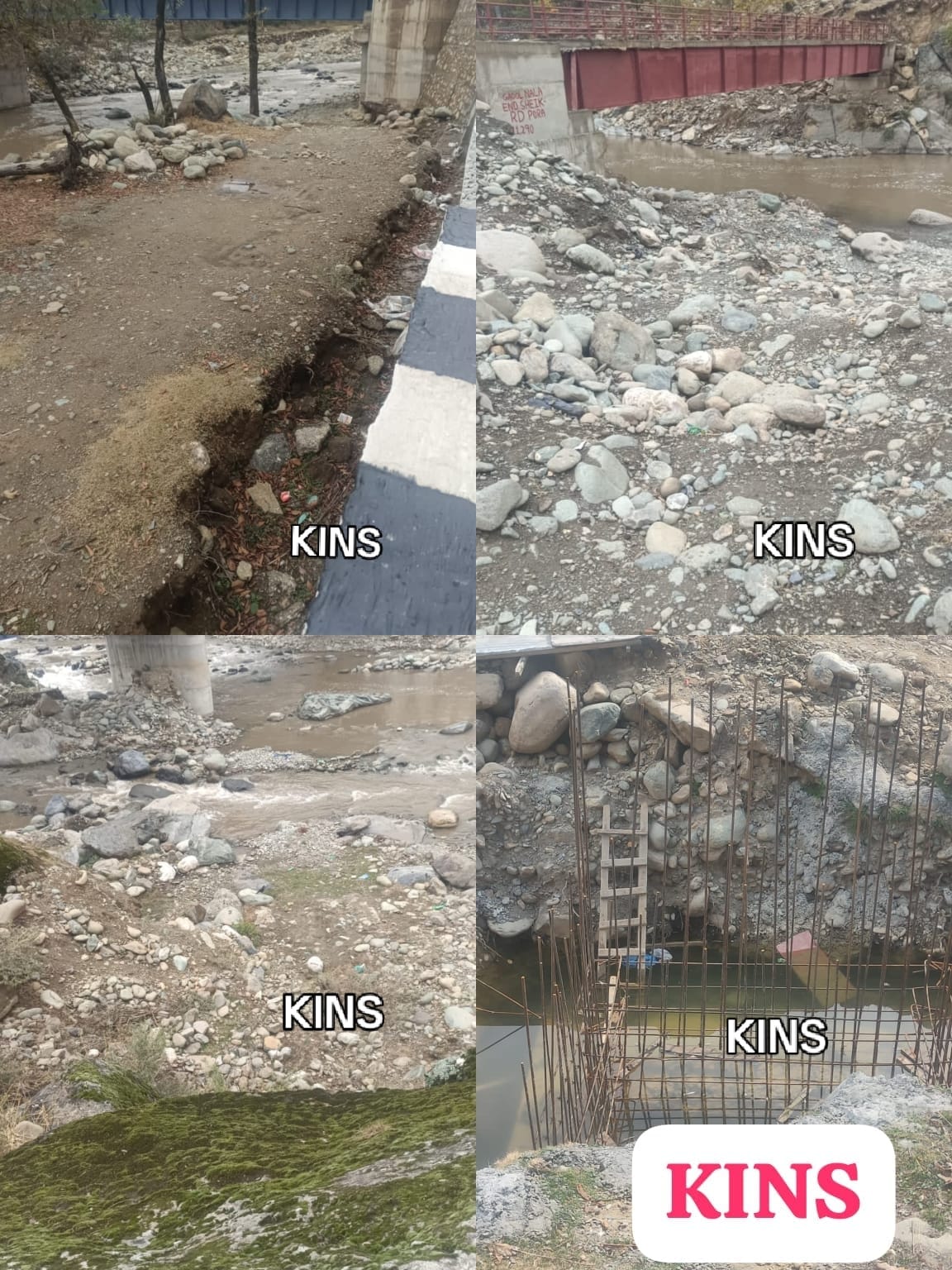
Construction activity raises concerns over ecological health of Trout-bearing streams in Anantnag
KINS Correspondent
Anantnag, Oct 16 (KINS): Construction activity along trout-bearing streams in South Kashmir’s Anantnag over the years has raised concerns over its potential impact on aquatic ecosystems, natural riverbeds and fish habitats, with locals calling for stronger monitoring and enforcement of environmental safeguards.
Bridge construction and other infrastructure works are essential for improving connectivity in remote areas. However, residents and people familiar with the ecological significance of these streams say activities involving heavy machinery, the movement of boulders and the dumping of construction material could disturb the natural character of these water bodies if not properly regulated.
Locals said the protection of trout-bearing streams requires greater attention, particularly during construction work near riverbanks and within water channels.
From Hiller to Vailoo, Develgam, Bahwathoo, Dandipura and Dessu, and towards Daksum, bridge construction and other infrastructure works are visible along the streams.
They stressed that development projects should be undertaken without compromising the ecological balance of streams that support aquatic life, fisheries and the livelihoods of people dependent on these natural resources.
“The issue is not against the construction of bridges or other public infrastructure. People need better connectivity, but development should not come at the cost of our natural water bodies,” a local resident said.
Another resident said construction activity near streams should be closely monitored to ensure that the natural flow of water is maintained and that riverbeds and banks are not unnecessarily disturbed.
“Once the natural bed and aquatic habitat are disturbed, the impact may extend beyond the construction site. The authorities should ensure that contractors follow all prescribed safeguards,” the resident said.
Environmental concerns are particularly significant in trout-bearing streams, where changes in water flow, sediment levels and streambed conditions can affect aquatic habitats and fish-breeding areas.
People familiar with fisheries conservation said site-specific assessments should be conducted before construction begins, while compliance with conditions laid down by the concerned departments should be monitored throughout project execution.
They also called for clarity regarding the responsibilities of field-level officials tasked with monitoring construction activities and ensuring that conditions attached to departmental permissions are followed on the ground.
A No Objection Certificate (NOC), they said, should not be treated merely as a procedural requirement but as an important mechanism for protecting sensitive aquatic ecosystems.
They said safeguards should include restrictions on the unnecessary use of heavy machinery within water channels, protection of natural banks and riverbeds, prevention of unauthorised extraction of boulders and pebbles, maintenance of natural water flow and restoration of areas disturbed during construction.
Speaking to the news agency Kashmir Indepth News Service (KINS), Assistant Director Fisheries Anantnag Shabir Ahmad said the department was taking measures to ensure that construction and other activities did not adversely affect aquatic ecosystems.
“Recently, we received compensation from a contractor who had deployed machinery to extract material from a water body. We do not allow bridge construction unless the required NOCs are obtained from all concerned departments,” he said.
He said the contractor concerned had been directed to procure construction material from outside the water body rather than extract it from the stream.
He added that the department was taking steps to ensure that activities in and around water bodies did not compromise their ecological health.
However, residents and conservation-minded observers maintained that the effective implementation of safeguards required regular field inspections, timely intervention wherever violations were detected, and coordination among the departments responsible for infrastructure development, fisheries and environmental protection.
They said a technical assessment by the competent authorities would help establish whether particular construction activities had damaged riverbeds or aquatic habitats and determine what remedial measures, if any, were required.
With infrastructure development continuing across the region, locals said the challenge was to strike a balance between public needs and the conservation of natural water resources.
They called for transparent monitoring of construction projects near trout-bearing streams, stressing that protecting these ecosystems was essential not only for fisheries but also for preserving the ecological health of Kashmir’s rivers and streams. (KINS)
