

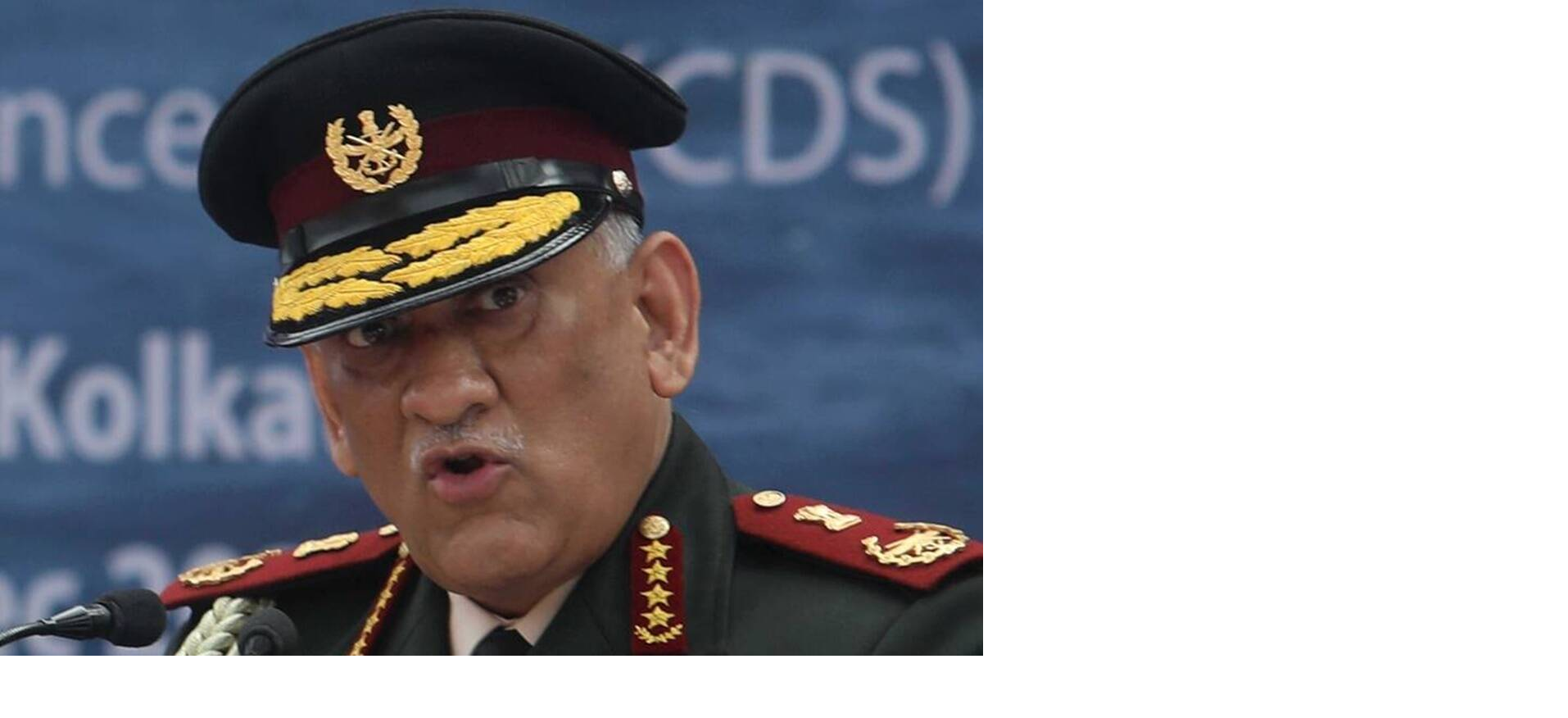
NEW DELHI: India needs a distinct military command structure and a complete paradigm shift to confront the emerging security threats like grey zone warfare, Chief of Defence Staff Gen Bipin Rawat said on Friday, justifying the ambitious theaterisation process in the Indian armed forces.
“We do not yet know the ultimate intention. But let them (Pakistan) attempt to do something to damage our assets, and the reaction from our armed forces will be very different. The political will is there. Our armed forces are ready,” he said, speaking at a webinar here.
“A strong message has to be sent that anything of this nature, grey-zone tactics or hybrid warfare, if it damages our assets and affects our national security, we reserve the right to respond at a time and place of our choosing and the manner in which we wish to respond,” he added.
A drone was spotted over the Indian High Commission complex in Pakistan last week, triggering a huge security scare in the mission, people familiar with the development said on Friday. The Indian mission has already taken up the issue strongly with the Pakistani authorities.
Referring to the border truce with Pakistan since February, the CDS said the mere stopping of cross-border firing on the Line of Control was not enough. “If you (Pakistan) are going to use indirect systems to disrupt harmony and cause damage, it amounts to a violation of the ceasefire,” he said.
Two days after the first-ever terror drone strike in the country at Jammu, PM Modi chaired a top-level meeting on Tuesday to discuss a policy on the use of civil drones, `futuristic challenges’ in the defence sector and the need to suitably equip the military with modern equipment to tackle threats.
Air Chief Marshal R K S Bhadauria, on his part, said IAF did have a limited number of “soft kill” jammers to disrupt the command-and-control links of small drones and “hard kill” counter-drone systems but they had not been deployed at the Jammu air station because it did not have “critical assets” like fighter jets.
