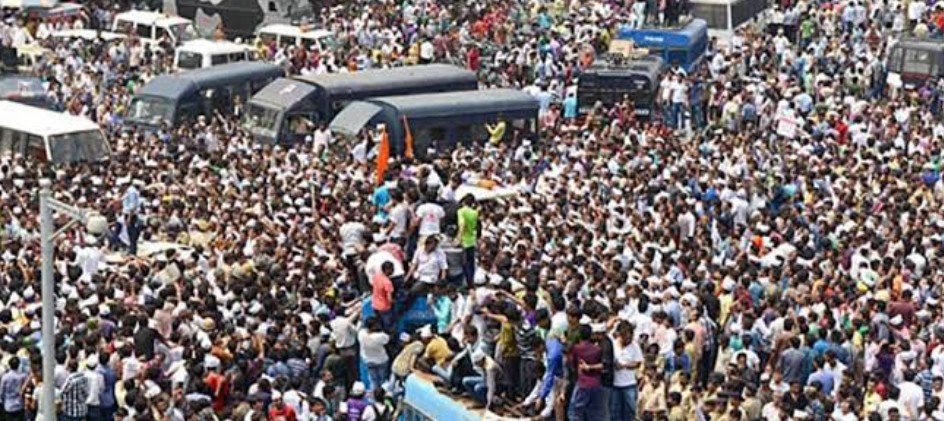
Srinagar, July 12: India’s population is projected to peak in the early 2060s at about 1.7 billion and then decline by 12 per cent, but the country will remain the world’s most populous throughout the century, the United Nations has said.
largest country in the world, with a population of 511 million people in 2100.
The report said that the estimated likelihood that the world’s population will peak within the current century is very high, with a probability of 80 per cent, a major change in UN projections from a decade ago, when this probability was around 30 per cent. The size of the world’s population in 2100 is now expected to be 6 per cent smaller – or about 700 million people fewer – than anticipated a decade ago.
In about 126 countries and areas, the population is likely to continue growing through 2054, potentially reaching a peak later in the century or beyond 2100. This group includes several of the world’s most populous countries: India, Indonesia, Nigeria, Pakistan and the United States of America.
In 2023, the global number of deaths among children under age 5 fell below 5 million for the first time in recent history. However, 95 per cent of such deaths took place in the 126 countries with populations that are still growing, including the Democratic Republic of the Congo, India, Nigeria and Pakistan.
The report added that globally, life expectancy at birth reached 73.3 years in 2024, an increase of 8.4 years since 1995. Further reductions in mortality are projected to result in an average longevity of around 77.4 years globally in 2054.
Since 2022, life expectancy has returned to levels observed before the emergence of the coronavirus disease in nearly all countries and areas. At the height of the COVID-19 pandemic during 2020 and 2021, global life expectancy at birth fell to 70.9 years, down from 72.6 in 2019.
The report said that by 2080, persons aged 65 or older will outnumber children under 18. “By the late 2070s, the number of persons at ages 65 years and higher globally is projected to reach 2.2 billion, surpassing the number of children (under age 18). By the mid-2030s, it is projected that there will be 265 million persons aged 80 years or older, more than the number of infants (1 year of age or less),” it said. (PTI)
India’s Population To Peak In Early 2060s To 1.7 Billion Before Declining: UN