
Kashmir Indepth
Nation

Crackdown on Pak terror: NIA raids 16 places in J&K linked to LeT’s TRF offshoot

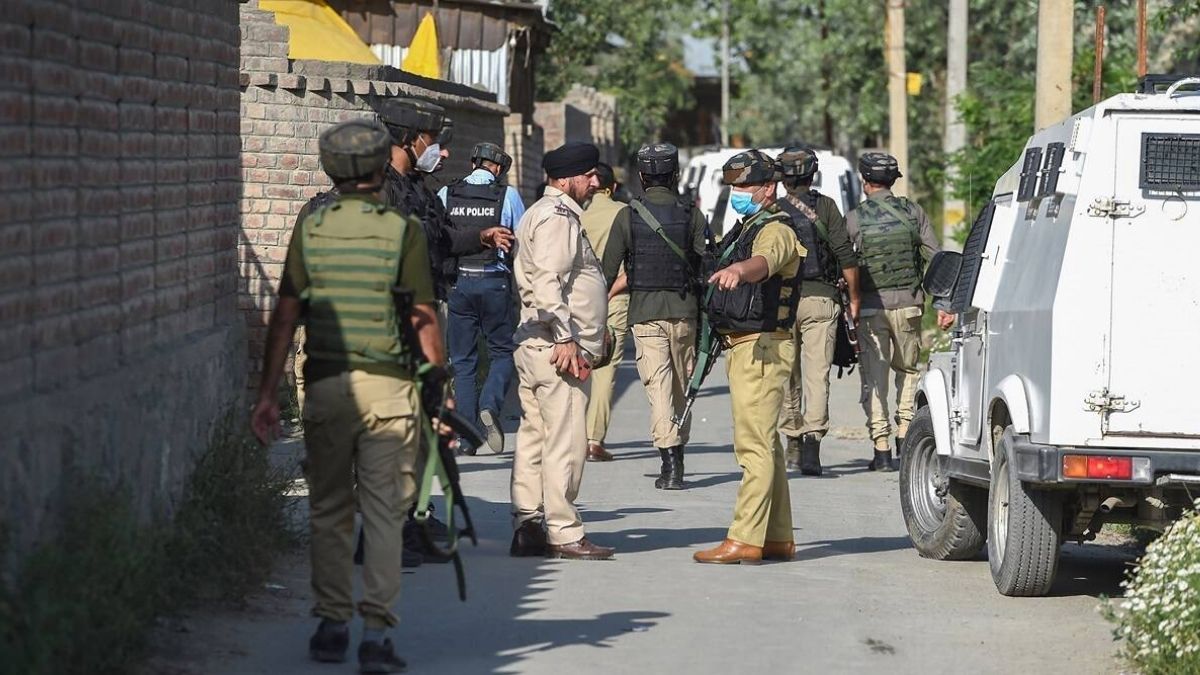
New Delhi, Oct 12 ( KINS): In a major crackdown against Pakistan-based Lashkar-e-Taiba’s (LeT’s) offshoot, The Resistance Front (TRF), the National Investigation Agency (NIA) on Tuesday conducted raids at 16 places in Jammu and Kashmir.

The NIA conducted searches with the assistance of the Central Reserve Police Force (CRPF) and Jammu and Kashmir and Kashmir Police in Shopian, Pulwama and Srinagar districts.

The anti-terror agency conducted these raids at locations in J&K in a new case linked to the Over Ground Workers of various “Tanzeems” (terror outfit wings) including the TRF.

The NIA on October 10 had also conducted searches at seven locations in Jammu and Kashmir and arrested two TRF operatives in the LeT- TRF conspiracy case. The NIA then conducted raids in Kulgam, Srinagar and Baramulla districts of the union territory.

The case was initially registered on June 27 this year at Bahu Fort district Police station in Jammu, relating to the recovery of an Improvised Explosive Device (IED) from a LeT terrorist in Bathindi region in Jammu on June 27. NIA had reregistered the case on July 19 this year. Earlier, three LeT terrorists were arrested in this case.

The investigation has revealed that Pakistan-based handlers of the proscribed terror outfit LeT and their associates based in Jammu and Kashmir had conspired to cause extensive terror activities for harming the general public, the NIA said.

“They had planned that responsibility for the terrorist acts so committed would be taken by the pseudo-acronym TRF so as to maintain plausible deniability and evade law enforcement agencies,” the agency added.

During the course of searches conducted on October 10, two TRF operatives, namely, Tawseef Ahmed Wani and Faiz Ahmed Khan of Baramulla and Anantnag districts respectively were arrested for their involvement in the conspiracy. ( KINS)

Related posts

Tour operator agent cheats Haj pilgrims of Rs 28 lakh

Kashmir Indepth

Swaraj for Some and not for others? Why Ladakh’s Democratic Aspirations Cannot Be Reduced to the Administrative Convenience of Districts Dr Gitanjali J Angmo How sad and ironic that the Ministry of Home Affairs, Government of India, argues that Ladakh needs more districts rather than a legislature or stronger constitutional safeguards under the 6th Schedule. It contends that Ladakh’s sparse population, strategic sensitivity, and financial dependence on the Centre make a legislature unnecessary. Instead, it offers administrative decentralisation through additional districts as a more practical solution. This argument is fundamentally flawed and reveals an impoverished understanding of democracy itself. Let’s break this down. The British Empire argued not too long ago that Indians lacked the maturity and institutional capacity for self-rule. That we were incapable of governing ourselves as a nation because we were poor, illiterate and incapable. It was against such paternalism that Sri Aurobindo pioneered the ideal of Purna Swaraj — absolute selfgovernance — not merely as an administrative arrangement, but as a civilizational necessity rooted in dignity, consciousness and national selfhood. Clearly, the British were on the wrong side of history. And yet after 80 years of independence, the argument that Ladakh should be content with districts instead of a legislature revives the old colonial logic shrouded in the language of nationalism. Must Ladakhis today prove once again to the rest of us that they are sufficiently populous, profitable, and capable to deserve a voice in the body politic? Does being geographically vast, sparsely populated and strategically located go against deserving legislature? The recent announcement of five additional districts in Ladakh — Nubra, Changthang, Sham, Zanskar and Drass — has been celebrated as a major governance reform. Certainly, administrative accessibility matters in a region spread across nearly 59,000 square kilometres of high-altitude terrain. Villages separated by mountain passes and harsh winters do require local administrative presence. But handing out districts is not democracy. Districts cannot legislate on land protection, demographic safeguards, ecological preservation, employment priorities, cultural autonomy, renewable-energy negotiations, education policy or the long-term developmental vision of the region. Districts are instruments of administration. Legislatures are instruments of representation. A district magistrate implements policy. A legislature shapes the future of a people. A district reports upward to the bureaucracy. A legislature answers downward to citizens. No amount of administrative decentralisation and convenience can substitute for political agency. The most troubling aspect of the present discourse is that the Government of India itself repeatedly promised constitutional safeguards to Ladakh. After the abrogation of Article 370 and the creation of the Union Territory in 2019, assurances regarding Sixth Schedule protections were publicly articulated by leaders of the Bharatiya Janata Party and reflected in their election manifestoes for MP and Hill Council elections in 2019 and 2020, respectively. Yet once the elections were over, and they won based on these very manifestos, they went back on their commitments, raising ethical questions: Can promises made to frontier populations become expendable after elections? What of the objections themselves? Take the first one — that Ladakh is too strategic a border to be trusted with self-government. Arunachal Pradesh shares one of India’s most sensitive borders with China. It is geographically vast, sparsely populated, strategically critical and financially dependent on the Centre. Yet when it was granted full statehood in 1987, its strategic location was not viewed as a security risk, but as a strategic necessity. India understood that border populations cannot be held merely through bureaucratic administration or military presence. The people who feel politically enfranchised and constitutionally respected defend a nation more fiercely than people who merely live inside its lines. If strategic sensitivity was an argument for empowerment in one Himalayan frontier, by what logic does it become an argument against it in another? The same applies to much of the Northeast. When Nagaland was granted statehood in 1963, its population was barely around 3.5 lakh. Mizoram became a state in 1987 with a population of roughly 5 lakh. Sikkim entered the Indian Union as a state in 1975 with a population of barely 2 lakh. Arunachal Pradesh itself had roughly 6 lakh people at the time of statehood. None of these states was financially self-sufficient. Many remain substantially dependent on central transfers even today. India did not tell them they were too small, or too poor, or too remote for a legislature. It understood that you do not integrate a frontier through subsidy and garrison alone. You integrate it through belonging. Which brings us to the fiscal objection — the weakest of the three. Ladakh, we are told, cannot cannot generate enough revenue to sustain itself. But since when has fiscal solvency become the price of admission to Indian democracy? India’s federal structure is built on redistribution; the Finance Commission exists precisely because some states earn more than others and the Union shares it out. Even large states depend heavily on central devolution. Uttar Pradesh, the most populous state in the country, draws enormous sums from the Centre through tax devolution, central schemes and grants-in-aid. Bihar, Assam and many other states similarly rely on fiscal transfers to bridge developmental disparities. Several Northeastern states derive between 70% and 90% of their expenditure from central assistance because mountainous terrain, sparse populations and strategic constraints limit conventional revenue generation. Would anyone, therefore, argue that Uttar Pradesh should surrender its legislature because it receives central funds? The suggestion would be laughed out of the room. Democracy in India has never been a reward for profitability — and if it were, much of the country would fail the test. Globally, the argument collapses even more dramatically. Iceland governs itself with fewer than four lakh people. Bhutan has fewer than eight. Luxembourg, Malta and Liechtenstein are all smaller in population and land than most Indian states. Yet no one argues that democracy becomes invalid below a certain population threshold. Indeed, some of the world’s most stable democracies are relatively small. The question was never really about Ladakhi population. It was always about whether anyone in power wished to hear them. And they are worth hearing — not least because the same establishment that calls Ladakh economically negligible is, at this very moment, planning to build some of the country’s largest energy infrastructure on its land. The renewable project slated for the Pang region of Changthang totals roughly 13 gigawatts of combined capacity, around 9 of which are solar, spread across tens of thousands of acres of high-altitude pastureland. At an investment of approximately Rs 50,000 crore and a potential of Rs 7000 crore of annual income, this is not the arithmetic of an insignificant place. It is the arithmetic of a region central to India’s energy future. Increasingly, Ladakhis are witnessing decisions regarding solar parks, transmission corridors, mining possibilities, tourism expansion and land use. So the real question sharpens: who negotiates the terms of that transformation? Who decides the land rights, the grazing rights of the Changpa herders whose flocks have crossed those plains for centuries, the ecological limits, the share of the jobs, the royalty owed to the people whose ground it is and inter-generational sustainability? A district officer cannot. A district officer was never meant to. That is the work of a legislature — of representatives who answer to the people, the decision falls upon. This is what the whole argument finally reduces to. India’s greatness was never administrative tidiness. It was the constitutional imagination to hold staggering difference inside one Union without flattening it — the same imagination that produced the Sixth Schedule in the first place, on the understanding that fragile, distinct, frontier places need protections the plains do not. Uniformity is not equity. And Ladakh is not asking to belong to India less. It is asking to belong more completely — not as a territory administered from a distance, but as a people shaping their own future. And that distinction matters. Sri Aurobindo wrote that freedom is the necessary atmosphere for a nation’s soul to grow. The soul of this nation has always been largest at its edges, in the places that chose Bharat and then defended it through cold and hardship and sacrifice without asking what it paid. The strength of a republic is not measured by how tightly it grips its frontiers. It is measured by how deeply and surely even its farthest mountains know and feel that they belong. The voice rising from the mountains of Ladakh today is not a demand for privilege. It is a quiet appeal to be trusted with itself.

Zainab Hamdani

Omar needs some sleep or a Pakistani passport, says BJP’s Gambhir

Kashmir Indepth

Airtel provides 360 million Indians with free access to Adobe Express Premium

Zainab Hamdani

Angela Merkel says current situation in Kashmir “not sustainable”

Kashmir Indepth

JKLF begins ‘free Yasin Malik’, ‘Lift ban on JKLF’ campaign

Kashmir Indepth

This website uses cookies to improve your experience. We'll assume you're ok with this, but you can opt-out if you wish. Accept Read More

Privacy & Cookies Policy