

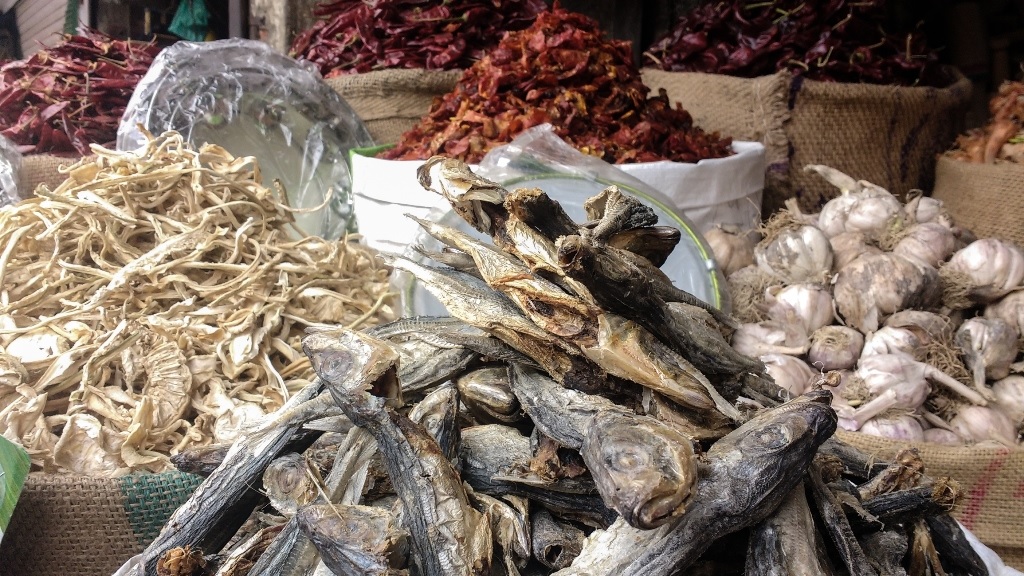
Kashmir, Nov 20 (KINS): The once-prevalent tradition of preserving dried vegetables, or Hokh Syun, for harsh winter months in Kashmir is fading into obscurity. Improved road and air connectivity, coupled with milder winters due to global warming, have significantly reduced the dependence on dried vegetables in the region.
Seventy-year-old Fatima Jan from Srinagar’s Downtown recalls a time when drying vegetables was a household necessity. “We used to sun-dry vegetables between April and October and store them for the winter when the region faced severe shortages. Heavy snowfall would cut off Kashmir from the rest of the world for weeks,” she told news agency KINS.
For centuries, Hokh Syun was an integral part of Kashmiri cuisine. In the past, when the Srinagar-Jammu National Highway would remain closed due to heavy snow, food supplies could not reach the valley. To overcome the scarcity of fresh vegetables, people turned to dried vegetables.
Hajra Begum, a resident of Baramulla, explained the labor-intensive process of preserving vegetables. “Vegetables were sliced and left to dry completely to remove all moisture. We threaded them into long garlands and hung them on walls or spread them in the sun during summer. These were then stored for winter consumption. Now, this tradition is largely confined to a few remote areas of North and South Kashmir,” she said.
The variety of Hokh Syun includes dried tomatoes, gourd, spinach, turnip, lotus stem, and brinjal. These preserved vegetables, once a staple, were even priced higher than fresh vegetables due to the effort involved in preparing them.
However, the advent of better transportation and agricultural practices has changed the scenario. Today, fresh vegetables are available throughout the year, even in winter, making Hokh Syun less appealing. Farooq Ahmad, a vegetable seller from Baramulla, attributed this decline to accessibility. “The Srinagar-Jammu National Highway no longer remains closed for long periods, and fresh produce is easily transported even during winter. Many farmers also grow vegetables in greenhouses, providing year-round availability,” he said.
The changing climate has further contributed to the diminishing tradition. Kashmir no longer experiences the harsh winters it once did, and snowfall has become less frequent and less severe. “People prefer fresh vegetables now, and the practice of drying vegetables has become too labor-intensive for most households,” he added. (KINS)
